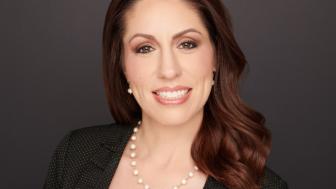
At Lesley University’s Boston Speakers Series lecture on January 16, preeminent warfare and foreign policy expert Peter Warren Singer delivered a thought-provoking, if sometimes chilling, overview of advances in military and civilian technology, and the implications these advances have on near and long-term projections for how technology will shape our conflicts.
“Technology is becoming easier to operate,” Singer explained. “You don’t need to learn a new language or be a trained operator anymore. In many cases all you need is a new app on your iPhone, and you can do things as complicated as piloting a drone.”
This new era of technology-driven warfare is the topic of Singer’s latest book, Wired for War: The Robotics Revolution and 21st Century Conflict, which examines the implications of robotics and other new technologies for war, politics, ethics, and law in the 21st century. These were topics that he discussed during his presentation at Boston’s Symphony Hall before a full house that was captivated both by his remarks and by the engaging slide and video presentation he used to illustrate his points.
Singer’s approach is equally focused on the future of warfare and the history of conflicts and technology, and he uses this approach to examine not only the technology we use to fight, but also the societal and ethical implications of those uses. For example, Singer points out that while the use of drones in areas of conflict is in its relative infancy, in the very near future – 2015 – drones will be legal for domestic use, opening a Pandora’s box for drone use in not only local and state law enforcement, but for civilian use by anyone who can purchase and operate the technology.
In addition to unforeseen increasing domestic use, drones have also had a significant impact on how the U.S. population considers its relationship with the conflicts their country is engaged in, and has allowed the government nearly unfettered permission to use force, something which formerly was highly regulated and which the general voting population had a much closer relationship with in the past.
“The U.S. military had only a handful of unarmed drones and no armed robotics on the ground when we went into Afghanistan,” Singer noted. “Today we have 8,000 in the air and 12,000 on the ground, many of them armed. Last year U.S. Air force trained more unmanned systems operators than it trained manned bomber pilots and manned fighter pilots combined.”
And as Singer points out, the use of new technologies in warfare is increasing exponentially alongside technological advances in the civilian sector. If advances in technology continue at their current and projected rate, we’ll see technology in 25 years that is many millions of times more powerful than what we are working with today, a prospect that raises numerous important questions about conflict, warfare and violence as our relationship with it and with the technology that is used in its name advances.
Dr. Singer is a Senior Fellow and Director of the Center for 21st Century Security and Intelligence at the Brookings Institution in Washington, D.C. Acclaimed as one of the world’s leading experts on changes in 21st century warfare, he has authored three books, advised the President, the Defense Department, the FBI, and the Congress, as well as the movie, television and video game industries. He has provided commentary on military issues for nearly every major TV and radio outlet, and he serves as a columnist for the Armed Forces Journal.
On February 20, Lesley’s next Boston Speakers Series event welcomes Erskine Bowles, Co-Chairman of the National Commission on Fiscal Responsibility and Reform. Along with Sen. Alan Simpson, he was named by President Obama to co-chair the bipartisan National Commission on Fiscal Responsibility and Reform, commonly referred to as Bowles-Simpson. His former posts have included president of the University of North Carolina system, White House Chief of Staff to President Clinton, and administrator of the Small Business Administration.
To learn more about Lesley University’s Boston Speakers Series and see a full schedule of speakers, click here.