The Office of Equity, Diversity, Inclusion, and Justice (EDIJ)
Welcome to the Office of Equity, Diversity, Inclusion, and Justice at Lesley University! Our department is dedicated to creating a vibrant, inclusive campus community where everyone is valued, respected, and empowered. We are committed to fostering an environment that celebrates diversity, promotes equity, and champions social justice.
We invite you to explore our website and discover the various programs, initiatives, and resources offered by the Office of Equity, Diversity, Inclusion, and Justice. Together, we can create an inclusive and equitable community where everyone can thrive. Join us as we Engage our Human Differences, Enhance our Belonging in the Community, and Strive Toward an Equitable Future.
-
Our Vision
At Lesley University, our differences enrich our collective experience and offer unique perspectives. We strive to Engage our Human Differences by encouraging meaningful dialogue, embracing diverse identities, and cultivating a culture of inclusion. We recognize that a diverse community fosters creativity, innovation, and personal growth, and we are committed to creating an environment where everyone feels valued and heard.
Enhancing our Belonging in Community is a central focus of our department. We are dedicated to creating a sense of belonging for every community member, including students, faculty, staff, and visitors. Through various programs, initiatives, and resources, we aim to build connections, foster empathy, and promote understanding across diverse backgrounds. A strong sense of belonging is crucial for personal well-being and academic success.
As we look toward the future, we are unwavering in our commitment to Strive Toward an Equitable Future. We recognize that systemic barriers and social inequalities persist, and we are dedicated to dismantling these structures through education, advocacy, and action. Our department works collaboratively with individuals and groups across campus to identify and address issues of inequity, creating a more just and equitable society.
-
Departments
- Intercultural Affairs
We create welcoming environments that enable Lesley's diverse community of students, faculty, staff, and alumni to interact with one another through meaningful dialogue and engagement that bridge their differences and strengthen the Lesley community. This department supports affinity spaces for students, resource groups for faculty and staff, wellness and brave spaces, lectures on global topics, and various other ways for students, faculty, and staff to engage around equity, diversity, inclusion, and justice at Lesley and beyond.
Learn more about Intercultural Affairs. - Training, Education, and Development (TED)
At Lesley, we create learning programs and development experiences that recognize and value diverse perspectives within our community. Our aim is to make us a stronger community of learners, teachers, and professionals, as well as to enable our students to incorporate equity, diversity, inclusion, and justice in their lives, their communities, or wherever their paths take them. Lesley community members can review training materials through our TED SharePoint site or learn more at our TED page. - Equal Opportunity and Title IX
We partner with collaborators and stakeholders to create the conditions that optimally support our Community Standards of Conduct and other University policies.
Learn more about Equal Opportunity / Title IX. - Urban Scholars Initiative (USI)
We help low-income college students, many of whom are the first in their families to attend college, to realize their academic and life potential by supporting their financial, academic, and emotional needs while they matriculate at Lesley University. Through the Urban Scholars Initiative, we provide tuition assistance, tutoring, and mentoring to enable students to graduate from college with modest or no loan debt. Since launching in 2013, more than 200 students have participated and the graduation rate has remained consistently high at 90%.
Learn more about the Urban Scholars Initiative.
- Intercultural Affairs
-
Thematic Calendar
Our Lesley community reflects many perspectives and life experiences. We are committed to infusing the tenets of equity, diversity, inclusion, and justice throughout the institution. We strive for an environment where people can participate equally and fully, where all individuals can express their identities an perspectives, and where all members of the community can effectively engage across differences in a community that is grounded in understanding, trust, and connectedness.
August: International Peace
When was the last time you proactively took initiative to learn about the challenges that currently exist in other identity/affinity groups?
September: New Celebration & Belonging
We challenge you to step outside your comfort zone! Introduce yourself to three people that you've never met before at Lesley. What did you learn?
October: Mental Health and Wellbeing
When was the last time you prioritized your overall self-care? Try to incorporate self-care as a part of your daily routine.
November: Strength
What are some of your strengths when faced with difficult interactions with others? Share with a friend today!
December: Peace and Harmony
How do you plan to ring in the 2024 new year with your loved ones?
January: Reflections
As we embark on a new year, what are some key areas in your life you wish to improve?
February: Love and Resilience
Think back to a time when you expressed an act of love. What was the outcome?
March: Herstory
Share with us stories of trailblazing women in your life who have made a positive impact.
April: Safety
What steps have you taken to ensure your colleagues and peers felt safe within the Lesley community?
May: Hope
If you could deliver a message of encouragement to your ancestors or descendants, which would you choose and why?
The Office of Equity, Diversity, Inclusion, and Justice is committed to creating community that engages our human differences, enhances our belonging at Lesley, and strives toward an equitable future. Every year we create this thematic calendar and invite the community to focus on a topic. Each theme has a Call to Action focused on increasing learning and building community.
-
EDIJ Advisory Council
The Equity, Diversity, Inclusion, and Justice (EDIJ) Advisory Council is a vital think tank, appointed by the Vice President of EDIJ. Comprised of individuals with diverse backgrounds, experiences, and expertise, the council serves as an invaluable sounding board and thought partner to the VP-EDIJ. This group volunteers for a one-year (two-semester) term.
Gathering once a month or in response to urgent matters, the council's commitment to substantive discourse and consequential collaborative response is steadfast. Their deliberations are characterized by a shared dedication to fostering an environment of inclusivity and belonging.
Each council member's selection is a testament to the VP-EDIJ's confidence in their distinct vantage points and areas of expertise. Handpicked based on recommendations from the Cabinet and Academic leadership, these adept thought partners and advisors play an integral role in aligning our EDIJ vision with our institution's overarching Strategic Framework and university-wide campaigns.
This EDIJ Advisory Council epitomizes a stride forward in our collective dedication towards advancing EDIJ at Lesley. The Council's advisory capacity will significantly bolster the VP and Office of EDIJ in spearheading efforts to harness our human diversities towards collective collaboration, augmenting our sense of belonging and fortifying our sense of community.
-
Land Acknowledgement
We acknowledge that the land we occupy on our campus in Cambridge has been cared for by Indigenous people since time immemorial. Explorers and colonizers came here and stayed without treating the people they met as equals or as rightful stewards of this land, taking their lives, land and resources.
We are gathered on the traditional homelands of the Massachusett Nation. We also acknowledge their neighbors and relatives, the Nipmuc and Wampanoag Peoples.
We humbly recognize the sacrifices that this country’s Indigenous communities were forced to make in order for us to be here and to hold this ceremony. We honor their connection to these lands and are grateful for the legacy they left us -- ceremonial and sacred places in nature, ancestral burial grounds on this land, and language through place names and words now integrated into English.
Our Team
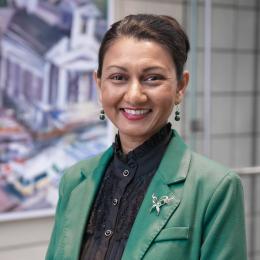
Elizabeth Hanlon

Gloria Noronha
Stella Panzarella

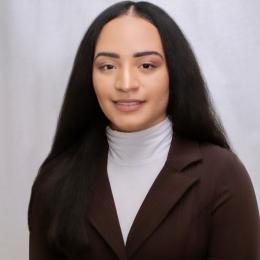
Yamileyka Rojas
Student Success Coach, Urban Scholars Initiative (USI)
Yami Rojas (she/her) is a USI Student Success Coach who deeply believes in equipping students with the tools they need to feel in control of their academic journey. Yami (pronounced "Jah me") partners with students to help them articulate their short-term academic and long-term career goals and ensures that these students have the resources they need to follow through on their plans.
Prior to being a USI Student Success Coach, Yami was an Out of School Youth Career Specialist at My Turn, Inc. In that role, she provided extensive consultative support to the programs so that the students are optimally positioned to succeed.
Yami holds a Master's Degree in Higher Education, as well as several certifications, including a certification in Social & Behavioral Research.
Valerie Yeakel
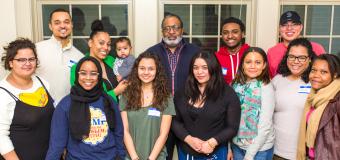
Intercultural Affairs
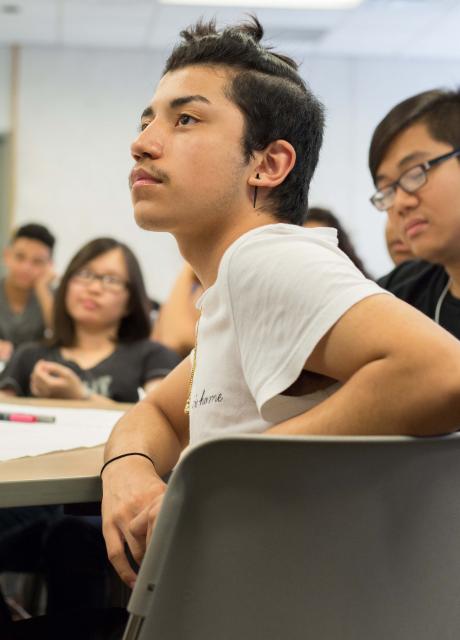
Urban Scholars Initiative
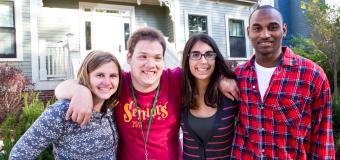
Threshold Program

Global Education Center

Yellow Ribbon Program for Veterans
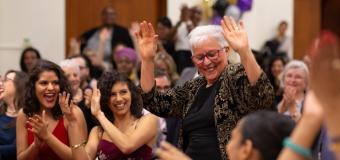
3rd Annual Unity Gala
- Equal Opportunity and Title IX
Valerie Yeakel, Equal Opportunity and Title IX Coordinator
ADA/504 Coordinator
equalopportunity@lesley.edu
vyeakel@lesley.edu
- Urban Scholars Initiative
Bwann Gwann, Student Success Coach
Yami Rojas, Student Success Coach
officeofusi@lesley.edu
- Physical Location
29 Mellen Street, Room 103
Cambridge, MA 02138